Web design and development is the work of planning, designing and building the site where people decide whether to contact you. Design covers how the pages look and the order in which information appears. Development is the code, the hosting and the connections that make it all work: a form that reaches the right inbox, a store that takes payments, a booking link that does not break on a phone.
For most business owners, the website is where a referral goes to check you out. Someone hears your name at a dinner in Coral Gables, searches for it and lands on your homepage. In a few seconds they decide whether you look like the right fit. A good site makes that decision easy, and a confusing one sends them back to the search results.
Why it matters for a business in Miami
Miami customers move between English and Spanish all day, and many of them will judge you by how well your site handles both. A Spanish version that reads like a machine translation tells a Hispanic buyer the business was not built with them in mind. A site that only exists in English can lose the family member who makes the final call.
Competition here is also close to home. A dental practice in Kendall, a law firm in Brickell or a restaurant in Wynwood competes with businesses a few blocks away that offer something similar. When the offers look alike, the site that explains itself better usually gets the call.
How we approach it at Twelve
We start with what the site has to accomplish and who it has to convince. That means looking at your offer, your best customers, the questions they ask before buying and the way they reach you today. Then we design. Each page gets a clear order, a plain headline and one obvious next step.
Senior thinking stays close to the work, from the first conversation to the review of the structure and the copy. We also build with the rest of your marketing in mind: pages ready for SEO and search, landing pages that match your paid campaigns, and forms that feed the automations your team relies on. If you want the longer argument, we wrote about why your website is not a brochure.
What the work looks like week to week
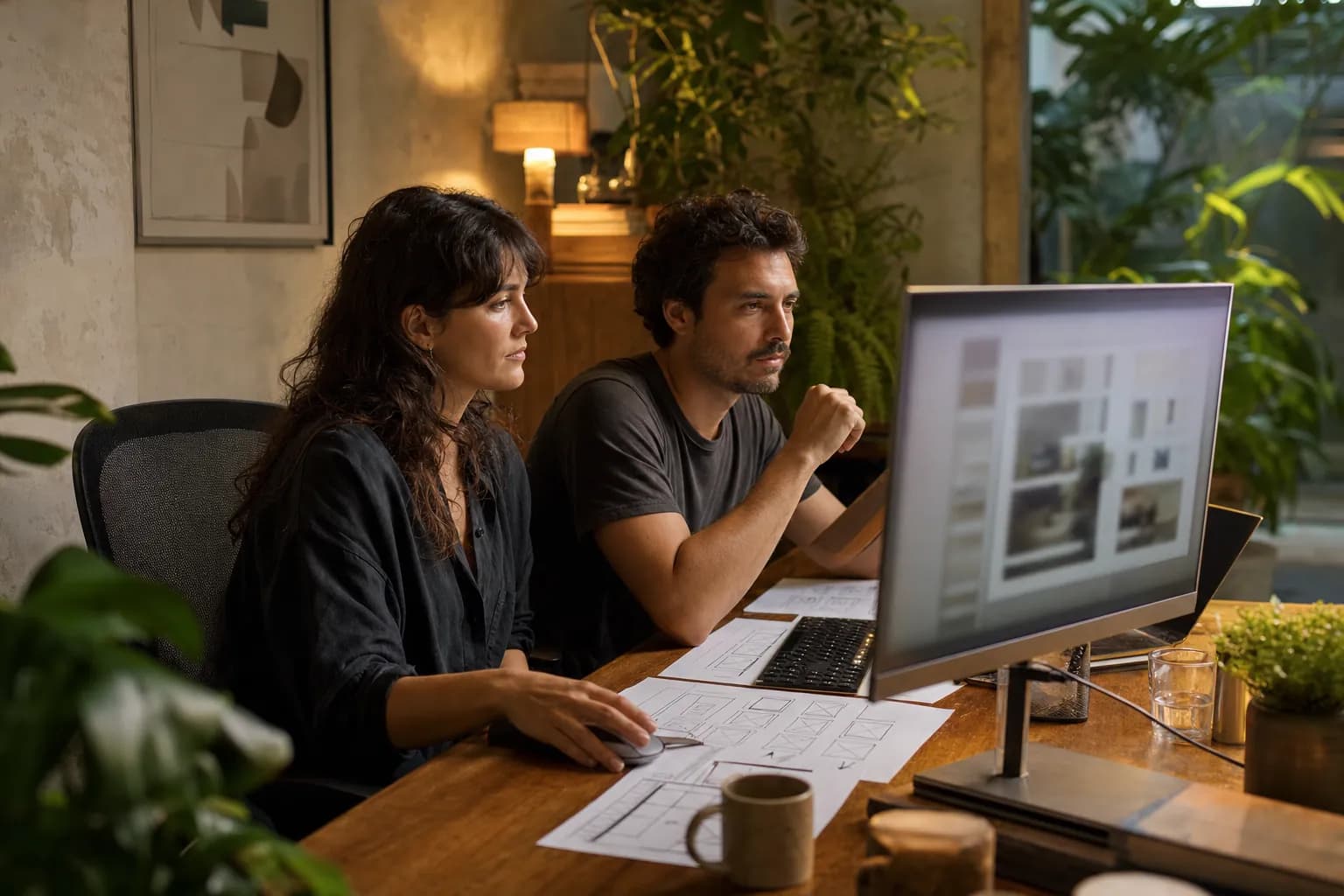
The first weeks are about structure. We review the current site and its analytics, talk with you (and sometimes with whoever answers your phones), and agree on a sitemap and on what each page needs to say. Wireframes and design come next in Figma, with real copy in both languages instead of placeholder text.
The build happens on the platform that fits the business:
- WordPress when your team already knows how to edit it.
- Shopify when the site is mainly a store.
- A custom Next.js site when speed and control matter most.
During the build we set up analytics, test every form, check speed on real phones and fix whatever slows the page down. Nothing goes live until we have filled out the contact form ourselves and seen where the message lands.
After launch, a site either keeps getting maintained or starts to decay. With ongoing management we handle updates, backups, small edits and new landing pages. Every month we also look at what visitors actually do on the site and tell you what we would change next.
Beyond the website: apps and cloud
When a business needs more than pages, our development team builds it: client portals, booking and quoting systems, dashboards and internal tools, usually with Laravel, Vue, Inertia or React. We keep the code in Git (GitHub or GitLab) and deploy on AWS, Google Cloud, Azure or an Ubuntu server we configure, secure and maintain. You get one team from the first wireframe to the server, instead of a designer, a developer and a hosting company that never talk to each other.